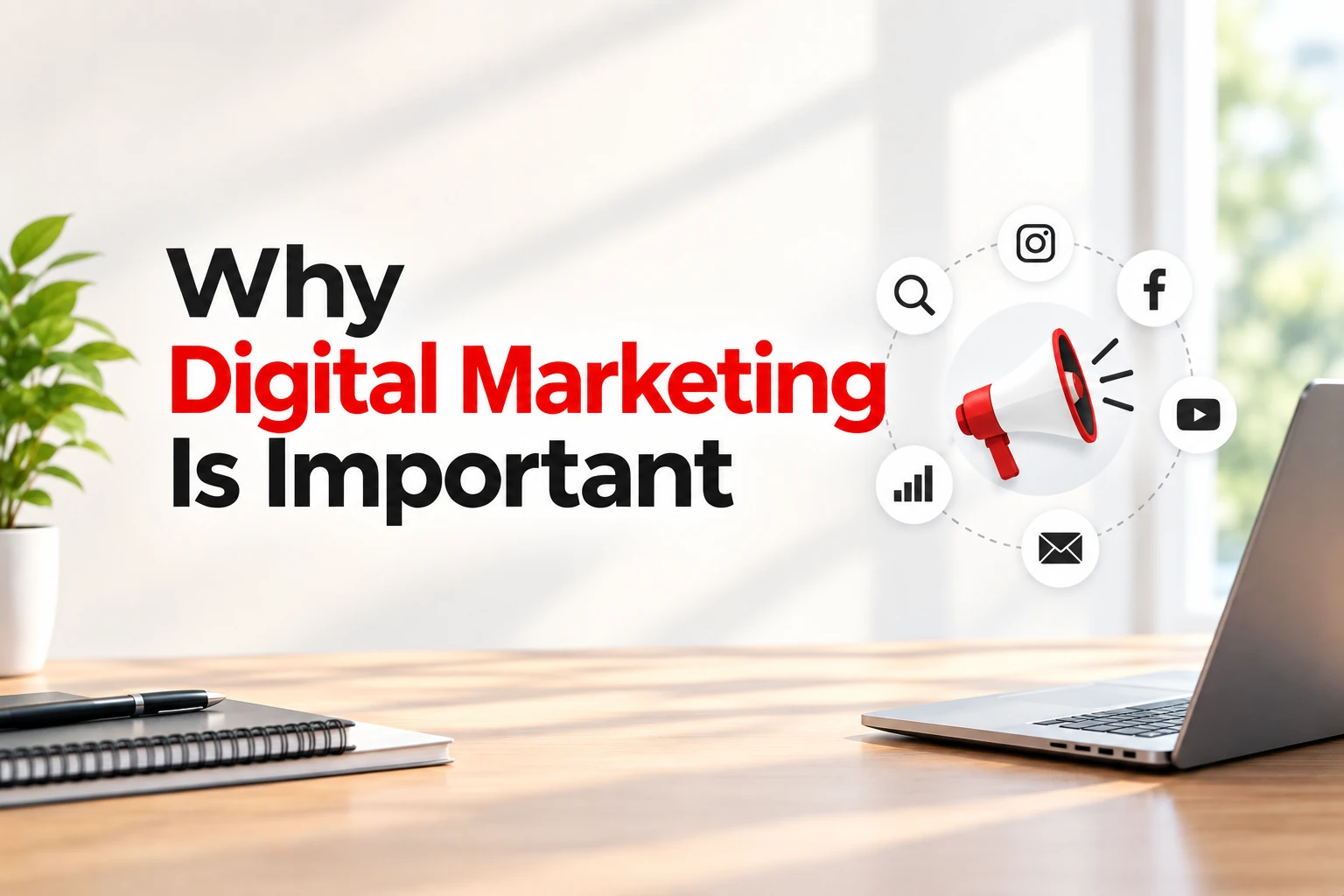
Digital marketing matters for one reason that has nothing to do with technology: it is the only kind of marketing where you can see what happened. A hoarding on Tonk Road either worked or it did not, and you will never know which. A ₹2,000 ad on a phone tells you how many people saw it, how many tapped, how many called, and what each call cost you. Everything else in this article follows from that one difference.
Ask a shop owner in Jaipur why they have not done anything online and you get one of three answers. My customers are local. My business is word of mouth. I tried it once and it did not work.
All three are worth taking seriously, because all three are sometimes right. Plenty of businesses genuinely do not need a content calendar. Some trades really do run on referral and always will.
But the third answer is the interesting one, because "I tried it once" almost always means the same thing: somebody paid ₹4,000 a month to an agency that posted three graphics a week on Facebook, nothing happened, and the whole idea got written off. That is not digital marketing failing. That is one bad version of it failing, and the difference matters.
This is the honest case for why it is important, what it actually does, what it costs in India, and where most of the money gets wasted.
Your Customer Already Checked You Before They Called
Here is the shift that made this non-optional, and it is not about ads at all.
Somebody recommends your shop to a friend. Twenty years ago that friend either turned up or did not. Today that friend types your name into a phone first. They look for a website. They look for reviews. They look at the photos. They decide whether you seem real.
That whole check takes about forty seconds and you are not present for it. You do not get to explain. If there is nothing to find, or what they find is a dead Facebook page from 2021 and one angry review, the referral you earned quietly evaporates and nobody tells you.
This is the part owners underestimate most. Being online is not primarily about finding new customers. It is about not losing the ones you already earned.
- Word of mouth now has a verification step. The recommendation still comes from a person. The decision happens on a screen.
- Absence reads as risk. A business with no trace online is not neutral to a buyer under forty. It reads as small, or closed, or a gamble.
- You do not see this failure. Nobody calls to tell you they looked you up and changed their mind. The loss is invisible, which is exactly why it goes unfixed.
The Real Difference: You Can See What Happened
Every argument for digital marketing eventually reduces to measurement. Not reach, not targeting, not cost. Measurement.
Spend ₹40,000 on a newspaper insert and you get a number: circulation. It tells you how many papers were printed. It tells you nothing about how many people saw your advert, and less than nothing about how many acted on it. Sales go up a bit that month, or they do not, and you build a theory.
Spend ₹40,000 online across three months and you know, to the rupee, which ad brought the enquiry, on which day, from which area, on which phone. You know your cost per enquiry. You know which of your services people actually search for, which is often not the one you think.
| Question | Newspaper or hoarding | Search or social ads |
|---|---|---|
| How many people saw it? | An estimate from the seller. | An exact number, updated hourly. |
| How many responded? | Unknown unless they mention it. | Counted, with the click and the call attached. |
| What did one enquiry cost? | Cannot be calculated. | Total spend divided by enquiries. Visible daily. |
| Can you stop a bad one? | No. It runs until the space is over. | Yes, in thirty seconds. |
| Can you start small? | Rarely. Rates are fixed and monthly. | Yes. ₹200 a day is a real test. |
| Does it keep working later? | No. It ends when the money ends. | Ads stop. Search rankings and content keep going. |
That last row is the one most owners miss, so it gets its own section below.
Six Reasons It Matters, In the Order It Actually Matters
1. You Can Start With ₹500 and Find Out
No other marketing channel lets you test an idea for the price of a tank of petrol. You can run one ad, for one service, to one pin code, for four days, and learn whether anybody in your city is looking for that thing at that price.
That is not a small advantage. It means you stop guessing about your own business. Owners routinely discover that the service they consider secondary is the one people search for most, and they only find out because a cheap test told them.
Spend your own ₹500 before you hire anyone. What you learn in that week will make you a much harder client to fool later.
2. You Reach People Who Are Already Looking
This is the piece that makes search different from every form of advertising that came before it, and it is worth being precise about.
A hoarding interrupts somebody thinking about lunch. A search ad appears in front of somebody who has just typed "CA for GST filing in Jaipur" into a phone. One of those people is a prospect. The other is a person with a lunch problem.
Nothing else in marketing gets you in front of demand that already exists, at the exact moment it exists. That is why search engine optimisation and paid search usually outperform everything else for businesses that sell a service somebody goes looking for.
3. Some of It Keeps Working After You Stop Paying
Advertising is rent. You pay, it runs, you stop, it disappears. That is true of hoardings, newspapers, radio and paid ads alike.
Search rankings and content are different. A page that answers a question well can sit on page one for years and bring enquiries every month long after the work of making it is done and paid for. It compounds instead of resetting.
This is the strongest long-term argument for digital, and it is also the slowest. Expect six to twelve months before a new page earns anything at all. Anyone promising rankings in thirty days is either lying or targeting phrases nobody types.
4. You Can Be Specific About Who Sees It
A newspaper reaches a city. An ad platform reaches a six kilometre circle around your shop, on Android phones, for people who searched for something related in the last month.
For a local business this is the difference between paying for the whole of Jaipur and paying for the part of Jaipur that could realistically walk through your door. If your customers come from three areas, you can spend your entire budget on those three areas.
5. Your Small Size Stops Being a Disadvantage
In print, the biggest cheque wins the biggest space. Online, a well-written answer from a two-person firm can outrank a national company on the question that matters to your customer, because relevance counts for more than budget on a specific local search.
That advantage is real but narrow. You will not outrank a national brand on a broad term. You can absolutely outrank them on "same day AC repair in Vaishali Nagar", and that search is worth more to you anyway.
6. Your Competitors Are Already There
This reason is last on purpose, because "everyone else is doing it" is a weak argument on its own. It matters here only because of the verification step described earlier.
When a buyer compares three businesses and two have a working website with photos, prices and reviews while the third has nothing, the third one is not in the comparison. They are not losing on merit. They are absent from the shortlist.
The most common thing we hear at GIT Infosys from an owner in their first month online is some version of the same surprise: "people are searching for that?"
It is almost never the service they expected. A furniture maker discovers the enquiries come from one particular chair. A clinic finds that half the traffic is one procedure nobody asked about on the phone. That single piece of information usually changes what they sell and how they price it, and it cost a few thousand rupees to learn.
What It Costs in India
The honest answer is that it varies more than any agency price list suggests. What follows is what small and mid-sized businesses actually spend, not a rate card.
| Stage | Monthly spend | What that buys |
|---|---|---|
| Just testing | ₹3,000 to ₹8,000 | Ads only, run by you, on one service and one area. No agency. |
| Getting serious | ₹15,000 to ₹35,000 | Ad budget plus someone managing it, plus basic SEO on your own site. |
| Growing on purpose | ₹40,000 to ₹90,000 | Multiple channels, content being published monthly, proper tracking. |
| One-off website | ₹15,000 to ₹75,000 | The foundation everything else points at. A one-time cost, not monthly. |
| Yearly running costs | ₹5,000 to ₹12,000 | Domain, hosting and business email. Small, but it never stops. |
Take your average sale value. Multiply by the share of enquiries that turn into sales. If a customer is worth ₹8,000 to you and you close one in four enquiries, each enquiry is worth ₹2,000 to your business.
Now you have a ceiling. If ads bring enquiries at ₹300 each, keep spending. If they cost ₹2,500 each, something is wrong and no amount of extra budget fixes it. Most businesses skip this calculation and then argue about whether digital marketing works, with no way of deciding.
Costs move a lot by trade. A property or insurance keyword can cost several hundred rupees a click, while a local repair service might be under ₹15. If you want a sense of your own market before committing, the real figures for Google Ads costs in India are more useful than any average.
Where the Money Actually Gets Wasted
Most businesses that say digital marketing did not work for them made one of these five mistakes. None of them are about the channel.
- Posting instead of selling. Three graphics a week on a page with 400 followers is activity, not marketing. It feels like progress because something is happening. Nothing is.
- Sending paid traffic to a bad page. Paying ₹30 a click to land somebody on a slow page with no phone number is buying a visit and throwing it away. Fix where they land before you pay to send them.
- Judging it in three weeks. Ads need a month to settle. SEO needs six to twelve. Owners who pull the plug in week three lose the money and learn nothing.
- Doing everything at once. Ads, SEO, Instagram, email, YouTube, all in month one, all shallow. One channel done properly beats five done badly, every time.
- Not counting anything. No call tracking, no form record, no note of where enquiries came from. Then nobody can say what worked, so the whole spend gets judged on a feeling.
The common thread is that four of those five are decisions, not skills. They can be fixed by the owner, this week, for free.
Which Channel First
The answer depends on one thing: whether people already search for what you sell.
| If your business is | Start with | Why |
|---|---|---|
| A service people search for when they need it | Search ads, then SEO | Demand exists already. You only need to be visible at that moment. |
| A local shop or clinic | Google Business Profile, then reviews | The map results sit above everything else and cost nothing to claim. |
| Something visual people buy on impulse | Instagram and Reels | Nobody searches for it, so you have to create the want. |
| Selling to other businesses | SEO and LinkedIn | Long decisions. Being findable and credible beats being loud. |
| An online store | Search ads plus product pages | Intent is high and you can measure the sale, not just the enquiry. |
If you are unsure which category you fall into, the fastest way to find out is to type what you sell into a phone and see whether anyone is already advertising against it. Somebody paying money for that phrase is the clearest evidence that demand exists. The wider spread of types of digital marketing is worth understanding, but only after you have picked one to start with.
What To Do First, If You Are Starting From Nothing
- Claim your Google Business Profile. Free, takes an afternoon, and for a local business it usually produces more enquiries in month one than anything you could pay for.
- Fix the page people land on. Phone number visible without scrolling, what you do in plain words, real photos, prices if you can bear it. Your website is where every other channel sends people, so it goes first.
- Ask ten customers for a review. Just ask. Most say yes and forget, so ask again once. Ten honest reviews change how a stranger judges you.
- Run one ₹500 test. One service, one area, four days. Watch what happens. Not to make money, to learn what a click costs in your trade.
- Write down where every enquiry came from. A notebook is enough for the first three months. Without this you are guessing forever.
- Only then hire someone. By now you know your numbers, so you can tell the difference between an agency with a plan and one with a posting schedule.
Notice that four of those six cost nothing and none of them require hiring anybody. If a business does those six things and still sees no change in three months, that is genuinely useful information, and it is the first time the "I tried it and it did not work" line would be fair.
How To Tell a Good Agency From a Bad One
You will not be able to judge their technical skill. You can judge how they talk about money, and that turns out to be enough.
| Ask them | A good answer sounds like | Walk away if |
|---|---|---|
| What will one enquiry cost me? | A range, with the reason it varies, and an offer to find out in month one. | They talk about reach and impressions instead. |
| How will I know it worked? | Call tracking, form records, and a number we agree on before starting. | The answer is a monthly report with graphs. |
| What is my ad budget versus your fee? | Split clearly, in writing, both figures named. | One combined number with no breakdown. |
| Who owns the ad account? | You do. It is opened in your name and you keep it if we part ways. | They own it and you get a login on request. |
| What happens in month one? | Something small goes live in week two, then we adjust. | A ninety day audit before anything runs. |
| What will you not do? | A straight list of what is outside the fee. | Everything is included, somehow, for ₹6,000. |
Notice that none of those questions are technical. An owner who has run their own ₹500 test can ask all six and understand every answer, which is the real reason to do the test first. If you would rather learn the mechanics properly before hiring anyone, our digital marketing classes in Jaipur cover exactly this ground, and plenty of people take them purely so they can manage an agency rather than become a marketer.
When It Is Not Worth It
Being straight about this makes the rest of the article more credible.
Digital marketing is a poor fit if you already have more work than you can handle and no plans to grow. It is a poor fit if you sell to a tiny number of named buyers you could simply phone. And it is largely wasted if your product or service is genuinely not good, because all it will do is bring more people to find that out faster.
It is also the wrong first move if your basic setup is broken. If your phone goes unanswered or your shop photos are five years old, fix those before spending a rupee on ads. Marketing makes an existing business bigger. It does not make a struggling one work.
The Short Version
- Your customers check you online before they call, whether or not you market online.
- The real advantage is measurement. You find out what worked instead of guessing.
- You can test an idea for ₹500, which no other channel allows.
- Ads stop when the money stops. Search rankings and content keep going.
- Most failures are bad decisions, not bad channels. Pick one and give it a proper run.
- Work out what an enquiry is worth to you first. Everything else is guesswork without it.
The businesses that get value out of this are rarely the ones with the biggest budgets. They are the ones that picked one channel, counted properly, and kept going past month three. That is most of the secret, and it is available to anyone.
Frequently Asked Questions
Why is digital marketing important for small businesses?
Two reasons. Your customers check you online before deciding, so being absent costs you referrals you have already earned. And it is the only marketing you can measure, which means a small budget can be spent carefully instead of hopefully.
A small business can also start at ₹500 and stop at any time. No newspaper, radio station or hoarding company will sell you a four day test.
How much should a small business in India spend on digital marketing?
Between ₹3,000 and ₹8,000 a month while you are testing on your own, and ₹15,000 to ₹35,000 once somebody is managing it properly alongside an ad budget.
Work out what one enquiry is worth to you before you pick a number. Average sale value multiplied by your closing rate gives you the ceiling, and everything below that ceiling is profitable.
How long before digital marketing starts working?
Paid ads produce enquiries in days, but the first month is mostly the platform learning who to show you to, so judge them at week five, not week two.
SEO and content take six to twelve months to earn anything meaningful. Anyone promising page one in thirty days is either targeting phrases nobody searches or is not being honest with you.
Is digital marketing better than traditional advertising?
For most small and mid-sized businesses in India, yes, and mainly because you can measure it and stop it. Traditional advertising still works for broad awareness at scale, which is not usually what a local business needs.
The two are not enemies. A hoarding plus a searchable website works better than either alone, because people who see the board then look you up.
Can I do digital marketing myself, or do I need an agency?
Do the first six steps yourself. Claiming your Google Business Profile, collecting reviews, fixing your website and running a small test are all within reach and they teach you your own numbers.
Hire when the work outgrows your evenings, or when you want a channel you cannot learn quickly. Hiring before you understand your cost per enquiry is how people end up paying for three graphics a week.
Which digital marketing channel should I start with?
If people already search for what you sell, start with search, either the free map listing or paid ads. If nobody searches for it because it is visual or impulsive, start with Instagram.
Whichever you pick, pick one. The most common waste we see is five channels running shallow at once, none of them given enough time or attention to show what they can do.
Does digital marketing work for local businesses that only serve one city?
It works better for them than for national brands, because you can spend the entire budget on the specific areas your customers come from instead of paying to reach a whole state.
For a genuinely local business the free Google Business Profile plus a steady flow of reviews often does more in month one than any paid campaign.
What is the biggest mistake businesses make with digital marketing?
Not counting anything. Without a record of where each enquiry came from, nobody can say what worked, so the whole spend gets judged on a vague feeling about whether the phone rang more.
The second biggest is stopping at week three. Both mistakes cost the money and produce none of the learning, which is the worst of both outcomes.